

Struggling with pain? How Acupuncture and Chinese Massage can help when nothing else seems to work.
By Stuart Dunn, Pulse4Life 01/09/26
If you’re dealing with persistent shoulder, neck or back pain, you’ll know how frustrating it can be. You’ve maybe tried rest, maybe seen a physio, maybe just pushed through it — and yet it’s still there, nagging away and affecting everything from your sleep, your work, to your ability to exercise.
This is exactly where Acupuncture and Chinese massage can make a real difference.
What is Chinese Massage?
Chinese massage (also known as Tui Na) works on the muscles, tendons and joints using firm pressure, stretching and rhythmic movements — similar in some ways to deep tissue massage but informed by the principles of Chinese medicine. Most people find it deeply relaxing as well as effective. You don’t need to know anything about Chinese medicine to benefit from it — you just need to show up.
What I actually do
I specialise in treating musculoskeletal pain — the kind that comes from sports injuries, overuse, or simply the wear and tear of an active life. Using a combination of Chinese massage and Acupuncture, I work to reduce muscular tension, stimulate the body’s natural healing response, and get you moving freely again.
Every treatment starts with a proper consultation so I understand your condition, your history, and what’s actually going on. From there I’ll decide on the right approach — sometimes that’s massage alone, sometimes acupuncture, often a combination of both. I may also use an infra-red lamp or electro-acupuncture to further stimulate tissue healing where needed.
And because I’m also a personal trainer and Pilates instructor, I can give you specific exercises to work alongside treatment — so you’re not just treating the problem, you’re building strength and resilience to stop it coming back.
What clients say
Bruce came to me recently with his mid and lower back in acute spasm — the kind where you can barely move. Through Chinese massage we were able to release the tension and get him moving again. He’s been pain free since.
Sarah, who had been struggling with chronic shoulder pain for over six months, tried the combination of massage followed by acupuncture. After treatment she had significantly more mobility and much less pain — and her words sum it up perfectly: ‘the combination really is a winner.’
One session can sometimes be enough
For acute conditions like Bruce’s back spasm, a single session can produce remarkable results. For more chronic or long-standing issues, a short series of treatments tends to work best — but you’ll usually notice a difference quickly.
Based in Stroud, with home visits available
I treat clients from my studio at Bowbridge Lane in Stroud, and I also offer home visits if that’s easier for you.
Treatments start at £50. If you’re in pain and want to have a chat about whether this could help, just get in touch — no obligation, just a conversation.
📱 07986 003602
📧 stuart@pulse4life.co.uk
🌐 www.pulse4life.co.uk/acupuncture
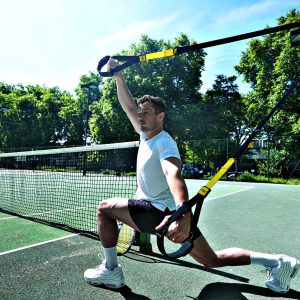 Fancy a Go at Tennis This Wimbledon?
By Stuart Dunn, Pulse4Life 01/07/26
There’s something about Wimbledon that makes everyone want to pick up a racket. If you’ve been thinking about giving tennis a try — or getting back on court after a break — now is the perfect time.
I coach tennis as part of my personal training work here in Stroud, and I have access to local courts for 1-2-1 sessions. Whether you’ve never held a racquet before or you used to play and want to find your game again, I can help.
Why 1-2-1 tennis coaching works so well
Group lessons are great, but there’s nothing quite like having someone focused entirely on you. In a 1-2-1 session we can work at your pace, focus on what you actually want to improve, and have a lot of fun along the way. No pressure, no embarrassment — just you, a racquet, and a ball!
Tennis is also brilliant exercise
It’s one of those activities that doesn’t feel like a workout — until the next morning! It builds coordination, agility, cardiovascular fitness and mental sharpness, all at once. I often add strengthening exercises into these sessions – building total body strength alongside the tennis. And research consistently shows that regular tennis players tend to stay active and mobile well into later life.
I train Sue who’s favourite workout is a tennis/conditioning combo – “Adding tennis into a training session is perfect, you still get all the exercises for strength & mobility, but with a shot of cardio & the buzz of hitting the ball over the net!”
Wimbledon ‘fever’ won’t last forever
The inspiration tends to fade once the tournament is over — so if you’ve been tempted, now’s the moment to act on it.
Get in touch for a no-pressure chat about what you’re looking for and we’ll take it from there.
📱 07986 003602
🌐 www.pulse4life.co.uk
📍 Stroud

The Truth About Returning to Exercise After a Hip Replacement
By Stuart, Pulse4Life 24/06/26
Six months ago I had my hip replaced. As a personal trainer who has spent years helping others recover from surgery, I thought I knew what to expect. In some ways I did. In many ways I didn’t.
What struck me most was how much recovery varies from person to person — and how unhelpful it can be to measure yourself against someone else’s timeline.
The problem with recovery checklists
The internet is full of milestone markers and recovery timelines. While useful as a rough guide, they can leave you feeling like you’re failing — when actually you’re doing absolutely fine.
Hip replacement recovery is deeply personal. Your age, fitness levels, the condition of your hip pre-surgery, and your mindset, all play a significant role. Two people can have the same operation on the same day and have completely different experiences six months later. Neither of them is doing ‘it’ wrong.
What I’ve learned from my own recovery
Months three to six are where recovery gets ‘interesting’!. The dramatic early milestones are behind you. You’re moving around and from the outside you look fine — but inside you’re still rebuilding strength, confidence, balance and trust in your new joint. This is the phase that doesn’t get talked about enough.
Why exercise matters — but so does patience
Gentle, progressive and gradually more challenging exercise, whilst listening to your body after a hip replacement, is absolutely the way forward. It rebuilds the muscles around the joint, improves stability and helps you get back to doing the things you love.
But it has to be the right exercise, at the right pace, for you — not for the NHS leaflet timeline or for that young person on YouTube who has no idea of how it feels to have a ‘bionic’ hip in an older body!
A personal trainer who understands post-surgical recovery can help you listen to your body, progress safely and build a programme around where you actually are — not where you think you should be.
If you’re in the middle of your recovery right now
Be patient with yourself. Celebrate the small wins. Stop Googling timelines.
I’ve been through it (and still am!) myself. I work with adults over 50 in the Stroud and Sherston area who want to feel strong, capable and confident again. If that sounds like you, get in touch for a no-pressure chat.
📱 07986003602 🌐 www.pulse4life.co.uk

My Bionic Hip!
By Stuart, Pulse4life 12/02/26
What I have learnt from surgery to recovery (11 weeks post Total Hip Replacement).
As a Physical trainer & therapist I am ‘conditioned’ to believe movement is medicine. So having decided to go through with total hip replacement at the end of November last year (2025), I continued to:
- strengthen the surrounding muscles.
- work on mobility daily.
- adjust my teaching & programming.
- prepare myself for surgery for the best possible outcome.
It was the identity crisis.
How could I coach people through strength and resilience when I was modifying every workout? When I couldn’t demo movements without discomfort? When I avoided certain exercises altogether? I felt frustrated, embarrassed. Even a little betrayed by my own body as I want to practice what I preach!
Surgery & Recovery: The Trainer Perspective
Recovery is a journey that must be taken steadily, which in my case, I don’t find easy as I want to be strong & dynamic asap!! At 6 weeks post surgery, both my surgeon and physio told me I am going amazingly well, but to slow down and (as I constantly tell my clients), ‘listen to your body!’
So, it’s been a bit humbling and we are all coming at this from our own perspective. I love the fact that I can go ‘stomping’ again in valleys of Stroud with no pain and returning to swimming has been great, feeling little loss in power. Cycling too has been great therapy – starting on the static indoor bike to get back on the road.
My big goal however is getting back in the surf, which requires much more dynamism – explosive movement, rotation, compression etc.
What I Understand Now That I Didn’t Before
I now understand my clients in a deeper way – I have lived experience of rehabilitating the body post surgery. I understand the:
* Fear of surgery
* Frustration with limitations
* The emotional toll of chronic pain
* The vulnerability of starting over
If You’re Considering Hip Replacement
Here’s what I want you to know:
* Arthritis isn’t a reflection of your effort.
* Surgery isn’t weakness.
* You can come back strong—sometimes stronger than before.
* Your journey will be personal, but you don’t have to navigate it alone.
As someone who has stood on both sides—trainer and patient—I can say this:
Movement is still medicine. Sometimes, it just requires a new joint

My recovery (as a physical therapist) from Hip Replacement
By Stuart, Pulse4life 14/12/26
My journey to THR (total hip replacement) is probably very similar to many people and as a physical therapist, the decision to go through with surgery being particularly difficult – am I ‘too young’, should I wait until it’s debilitating etc.
For a number of years my right hip has just not been right – limited ROM (range of movement), increased stiffness and over the past 2 years, increasing pain in the groin and buttock. Rounds of physio and other treatments gave no lasting effect, X-ray showed moderate arthritis and then finally an MRI scan showed more severe OA (osteoarthritis) with osteophytes (extra bone growth) adding to the pinching and grinding on the joint.
Walking in particular became joyless and at times the extreme pain driving me to despair! I seemed to be able to carry on with teaching, modifying my movements, but at times dealing with a lot of pain. The things I loved doing – surfing, tennis, all became compromised and stepping out with the dog for a run had for a long time become a no no!
I was constantly modifying my gait to combat hip pain and the final straw was really struggling with the building work we had undertaken with our new house! I wanted to get back to the ‘old me’ pre hip OA and embrace the joy of movement once again. So here we are, (mental torture) decision made to go for THR at 58 yrs old!
(Above photo is of me still goofing around pre-op. Photo below, post-op, after anaesthetic has worn off!)

Below is a video diary of day 1 through to 2 weeks post surgery.
Videos of post surgery include: Day 1(I says day 2, but I’m confused!), Day 3, Day 4, Day 6, Day 10 & 2 weeks post op.
Unlocking the benefits of Strength Training: Embracing functional fitness with Kettlebells
Stuart, Pulse4life 14/01/25

Strength training is an essential component of a well-rounded fitness routine, offering a multitude of benefits for individuals of all ages. While often overlooked in favour of cardiovascular exercise, incorporating strength training into your regimen can lead to improved overall health, increased muscle mass, and enhanced quality of life. Today, I want to explore the advantages of strength training and introduce an effective and engaging way to incorporate it into your fitness journey: kettlebell training.
Research has consistently demonstrated the positive impact of strength training on various aspects of health. Regular resistance exercise has been shown to improve bone density, reduce the risk of chronic diseases such as diabetes and heart disease, and enhance mental well-being by reducing stress and boosting self-confidence (Westcott, 2012). Additionally, maintaining muscle mass through strength training becomes increasingly important as we age, as it helps preserve functional independence and reduces the risk of falls (Avers & Brown, 2009).
One of the most effective and versatile tools for strength training is the kettlebell. Kettlebells are compact weights that allow for a wide range of exercises targeting multiple muscle groups simultaneously. What sets kettlebell training apart is its emphasis on functional fitness – exercises that mimic real-life movements and engage the entire body. By training with kettlebells, you can improve your strength, stability, and coordination, making everyday activities easier and more efficient.
Kettlebell exercises often involve compound movements, such as swings, cleans, presses, and squats, which engage multiple joints and muscle groups at once. This not only provides a time-efficient workout but also helps develop core strength, balance, and overall functional fitness. Moreover, the dynamic nature of kettlebell exercises offers a cardiovascular benefit, making it a well-rounded training tool.
One of the great aspects of kettlebell training is its adaptability to different fitness levels. Whether you’re a beginner or an experienced athlete, kettlebell exercises can be modified to suit your needs and goals. By adjusting the weight, repetitions, and complexity of the movements, you can progress at your own pace and continuously challenge yourself as you grow stronger.
If you’re interested in experiencing the benefits of kettlebell training firsthand, I am excited to announce that I will be starting a new kettlebell class, Tuesday mornings at The Open House (by Star Anise). This class will provide a supportive and engaging environment for individuals of all fitness levels to learn proper techniques, build strength, and improve their overall functional fitness. I will guide you through a variety of exercises, offering modifications and progressions to ensure that you get the most out of each session.
Incorporating strength training into your fitness routine is a powerful way to improve your health, boost your confidence, and enhance your overall quality of life. By embracing the versatility and effectiveness of kettlebell training, you can unlock the many benefits of functional fitness and discover the transformative power of strength training for yourself.
References: Avers, D., & Brown, M. (2009). White paper: Strength training for the older adult. Journal of Geriatric Physical Therapy, 32(4), 148-152.
Westcott, W. L. (2012). Resistance training is medicine: effects of strength training on health. Current sports medicine reports, 11(4), 209-216